


-
TurboAir II - 24v Direct Drive Solar Pond Aerator
Regular price $5,69595Sale price $5,69595 Regular priceUnit price per -
TurboAir I - 24V Direct Drive Solar Pond Aerator
Regular price $5,49595Sale price $5,49595 Regular priceUnit price per -
Bill Dance Series - Solar Powered Outdoor & Fish Feeder - 125lb
Regular price $1,10000Sale price $1,10000 Regular priceUnit price per -
Solaer Solar Powered Pond Aerator - Up to 2 acres
Regular price $8,38077Sale price $8,38077 Regular priceUnit price per -
Solar Chargers for Sweeney Feeders
Regular price $8000Sale price $8000 Regular priceUnit price per -
Solaer Solar Powered Pond Aerator - Up to 1 acre
Regular price $7,99042Sale price $7,99042 Regular priceUnit price per -
Solaer Solar Powered Pond Aerator - Up to 4 acres
Regular price $16,56385Sale price $16,56385 Regular priceUnit price per -
NitroAir II- Solar Direct Drive Pond Aeration System
Regular price $4,69500Sale price $4,69500 Regular priceUnit price per$000 -
TurboAir III - 24v Direct Drive Solar Aeration System
Regular price $6,29595Sale price $6,29595 Regular priceUnit price per -
NitroAir 1 - Solar Direct Drive Pond Aeration System
Regular price $4,49500Sale price $4,49500 Regular priceUnit price per$4,99500Sale -
NightAir II™ Battery Back Up Solar Aerator
Regular price $12,59500Sale price $12,59500 Regular priceUnit price per -
Scott Aerator Solar Back-up Battery Module | 48V Battery Backup for Solar Pond Aerators | 3-Day Runtime
Regular price $7,99500Sale price $7,99500 Regular priceUnit price per -
Scott Aerator Solar Subsurface Aeration System | Solar Bottom Aerator | 2 or 4 Diffusers, No Batteries
Regular price $6,29900Sale price $6,29900 Regular priceUnit price per -


Scott Aerator Solar DA-20 Display Aerator | Solar Pond Aerator with Fountain Display | 1/2 or 3/4 HP
Regular price $6,59500Sale price $6,59500 Regular priceUnit price per -
Scott Aerator Solar Boilermaker Aerator | Solar Powered Pond Aerator | 1/2 or 3/4 HP, 2 or 4 Panel
Regular price $6,39500Sale price $6,39500 Regular priceUnit price per -
Scott Aerator Solar Atriarch Fountain | 1/2 HP Solar Pond Fountain | 9-Jet Pattern, 2-Panel Solar
Regular price $6,95000Sale price $6,95000 Regular priceUnit price per -
Scott Aerator Solar Amherst Fountain | 1/2 HP Three-Tier Solar Pond Fountain | 2-Panel Solar System
Regular price $6,95000Sale price $6,95000 Regular priceUnit price per -
Scott Aerator Solar Skyward Fountain | 1/2 HP Solar Pond Fountain | 2-Panel Solar System
Regular price $6,95000Sale price $6,95000 Regular priceUnit price per -
Bill Dance Series - Solar Powered Outdoor & Fish Feeder 425lb
Regular price $1,57500Sale price $1,57500 Regular priceUnit price per$1,65000Sale -
PV Cable - 30' for Solar Panels - MC4
Regular price $4999Sale price $4999 Regular priceUnit price per -
Pole Mounts for Solar Panels
Regular price $39999Sale price $39999 Regular priceUnit price per -
Palatial Display Solar Pond Fountain
Regular price $7,99500Sale price $7,99500 Regular priceUnit price per -
Outdoor Water Solutions Aerify Solar Pond Fountain
Regular price $7,99595Sale price $7,99595 Regular priceUnit price per -
Kasco Solar Surface Pond Aerator
Regular price $6,40300Sale price $6,40300 Regular priceUnit price per





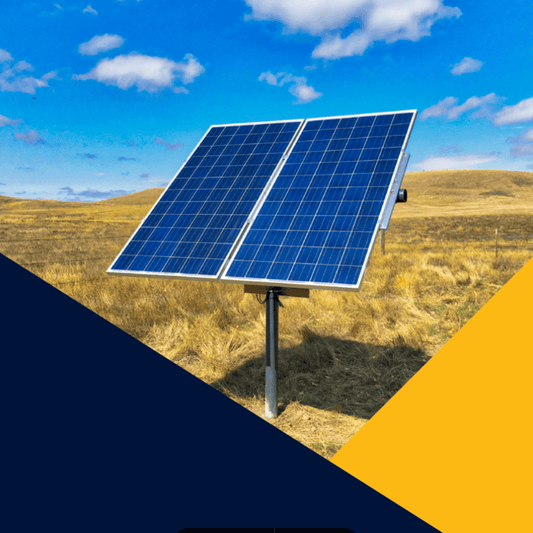


Collection: Solar Pond Aerators

Why Choose a Solar Pond Aerator?
Solar pond aerators have transformed how pond owners manage water quality in remote locations. If your pond sits far from an electrical outlet — or you simply want to eliminate ongoing energy costs — a solar aerator is the smart choice.
Modern solar pond aerators are dramatically more reliable than even five years ago. Improved panel efficiency, better battery technology, and more powerful compressors mean today's solar units deliver serious aeration performance without a single electricity bill.
Key benefits of solar pond aeration:
- Zero operating costs — no electricity means no monthly energy bills, saving $200-500+ per year compared to electric aerators
- Perfect for remote ponds — no need to run power lines hundreds of feet to your pond
- Environmentally friendly — zero operating emissions, powered entirely by the sun
- Easy installation — no electrician needed, most systems install in under 2 hours
- Low maintenance — clean solar panels once or twice a year, and you're done
Whether you're managing a farm pond, a rural property, or a homeowner's association lake, solar aeration makes clean, healthy water achievable anywhere the sun shines.
Solar vs Electric Pond Aerators

Choosing between solar and electric aeration comes down to your pond's location, size, and your priorities. Here's an honest comparison:
| Feature | Solar Aerator | Electric Aerator |
|---|---|---|
| Operating Cost | $0/year | $200-500/year |
| Power Source | Solar panels (no outlet needed) | 110v or 220v electrical outlet |
| Best For | Remote ponds, under 3 acres | Any pond, especially large (3+ acres) |
| Performance | Good (daytime) / Great (battery backup) | Excellent (24/7 consistent) |
| Price Range | $800-2,500 | $400-5,000+ |
| Maintenance | Minimal — clean panels annually | Minimal — standard checks |
| Winter Performance | Reduced output in low-sun months | Full power year-round |
The honest take: For ponds with electricity readily available, electric aerators generally deliver more aeration power per dollar. But for remote locations, ponds without power access, or owners who want zero operating costs, solar is the clear winner. Many pond owners use solar as their primary system on smaller ponds and as a supplemental system on larger ones.
Solar Pond Aerator Sizing Guide

Choosing the right size solar aerator is critical. An undersized system won't adequately oxygenate your water, while an oversized system wastes money. Here's our sizing recommendation based on thousands of installations:
Small Ponds (Under 1/2 Acre)
A single direct-drive solar aerator handles most small ponds effectively. These are the most affordable option and perfect for decorative ponds, small farm ponds, and backyard water features. Look at our NitroAir I or Solaer 1-acre systems.
Medium Ponds (1/2 to 1 Acre)
Medium ponds need more airflow. A battery-backup solar aerator is ideal here — it ensures your pond stays oxygenated overnight and during cloudy periods. The NightAir II or Solaer 2-acre systems are excellent choices for this range.
Large Ponds (1 to 3 Acres)
Larger ponds require multi-diffuser systems with robust solar panels and battery backup. Our OWS Deep Water Classic series and NightAir III systems are designed specifically for this size range, with multiple diffuser plates for even oxygen distribution.
Ponds Over 3 Acres
For ponds larger than 3 acres, solar alone may not provide sufficient aeration as the primary system. Consider supplementing with an electric aeration system or using multiple solar units strategically placed around the pond.
Depth matters too: Deeper ponds (8+ feet) benefit more from bottom-diffused aeration. Make sure your solar system includes enough airline tubing and weighted diffusers to reach the pond bottom.
Direct Drive vs Battery Backup Solar Aerators
This is the most important decision when choosing a solar pond aerator:
Direct Drive Solar Aerators run only when the sun is shining. The solar panel powers the compressor directly — no batteries involved. They're simpler, more affordable ($800-1,500), and have fewer components that can fail. Best for: supplemental aeration, small ponds, or ponds that already have another aeration source.
Battery Backup Solar Aerators store solar energy in batteries during the day and use it to run the compressor around the clock — even overnight and on cloudy days. They cost more ($1,200-2,500) but provide consistent, 24/7 aeration. Best for: primary aeration source, fish ponds, ponds with algae problems.
Our recommendation: If this solar aerator will be your pond's ONLY aeration source, we strongly recommend battery backup. Oxygen levels drop naturally at night (when plants and algae consume oxygen instead of producing it), which is exactly when your fish need aeration most. A direct-drive system that shuts off at sunset leaves your pond vulnerable during the most critical hours.
Installation Tips

Most solar pond aerators install in 1-2 hours with basic tools. Here are key tips for optimal performance:
- Panel placement: Face panels south (in the Northern Hemisphere) at a 30-45° angle. Avoid shade from trees, buildings, or fences — even partial shade dramatically reduces output.
- Distance from pond: Keep the compressor and panels as close to the pond edge as practical. Longer airline runs reduce airflow and efficiency.
- Diffuser placement: Place weighted diffusers at the deepest point of your pond for maximum water circulation and destratification.
- Winter considerations: In northern climates, increase panel angle to 60° in winter to capture low-angle sun. Battery backup systems will have reduced runtime but still provide valuable aeration during ice-over periods.
Need help with installation? Our pond experts offer free installation guidance. Call us and we'll walk you through the optimal setup for your specific pond.
Frequently Asked Questions
Do solar pond aerators actually work?
Yes — modern solar pond aerators are very effective. Today's systems use high-efficiency panels and compressors that deliver real aeration power. For ponds under 3 acres, a properly sized solar aerator provides excellent water quality improvement. The key is choosing the right size and opting for battery backup if it's your primary aeration source.
How much does a solar pond aerator cost?
Solar pond aerators range from $800-2,500 depending on pond size and whether you choose direct drive or battery backup. Direct drive systems (daytime only) start around $800. Battery backup systems (24/7 operation) typically start around $1,200. While the upfront cost is higher than basic electric aerators, solar systems pay for themselves within 2-4 years through eliminated energy costs.
Can a solar aerator run at night?
Only with battery backup. Direct drive solar aerators run only when sunlight hits the panels. Battery backup models store energy during the day and run the compressor overnight. If nighttime aeration matters for your pond (it usually does, especially for fish ponds), choose a battery backup model like our NightAir series.
What size solar aerator do I need?
As a general rule: under 1/2 acre needs a single-diffuser system, 1/2 to 1 acre needs a mid-range system with battery backup, and 1-3 acres needs a multi-diffuser system. Ponds over 3 acres may need multiple solar units or a supplemental electric system. Call us for free expert sizing — we'll recommend the exact system for your pond's size, depth, and conditions.
Solar pond aerator vs windmill aerator?
Solar aerators are more consistent — they produce power whenever the sun shines, which is more predictable than wind. Windmill aerators are decorative and work well in consistently windy areas, but performance varies dramatically with weather. Solar also offers battery backup options for 24/7 operation, while windmill aerators stop when the wind stops. For reliable aeration, we recommend solar over windmill in most situations.
Not Sure Which Solar Aerator Is Right for Your Pond?
Our pond experts have helped thousands of pond owners find the perfect solar aeration system. Tell us your pond size and depth, and we'll recommend the ideal setup — free.
Call for Free Sizing Help →Or browse our full range of electric pond aerators if you have power available
NOT SURE WHAT AERATOR YOU NEED?
Let us Help!