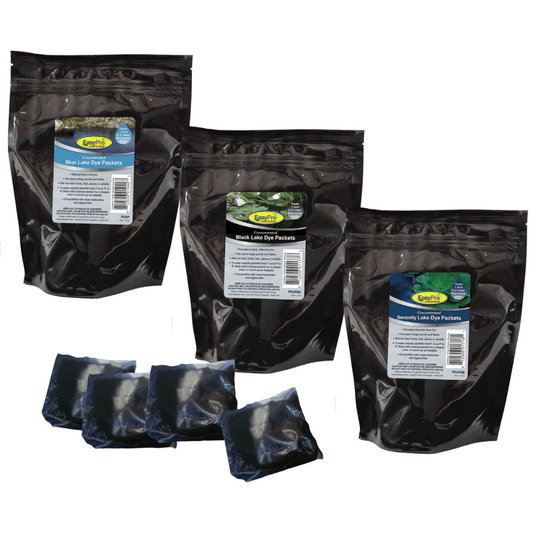
Pond Dye
Pond dye is one of the simplest and most effective tools for improving both the look and the health of your pond. A few ounces of concentrated colorant can transform murky, unattractive water into a vibrant aqua blue or deep midnight blue — and it does more than just look good.
How Pond Dye Works
Pond dye works by filtering sunlight as it passes through the water column. Algae needs sunlight to grow, and by reducing UV penetration below the surface, pond dye limits the conditions that fuel algae blooms. It's not an algaecide — it won't kill existing algae — but it's an excellent preventative measure that reduces new algae growth naturally, without chemicals.
The result is cleaner-looking water, less green scum on the surface, and a more balanced pond ecosystem. Many pond owners use dye alongside aeration and beneficial bacteria for a complete water quality management approach.
Blue vs. Black Pond Dye
The two most popular pond dye colors are aqua blue and black (midnight blue):
-
Aqua blue dye gives your pond a bright, tropical blue appearance. It's the most popular choice for decorative ponds, golf course water features, and residential landscapes where visual appeal is a priority.
-
Black or midnight blue dye creates a dark, reflective, mirror-like surface. This is popular for ponds where you want a natural, deep-water look — or where you want to reduce visibility into the water to protect fish from predators like herons.
Both colors provide the same UV-filtering benefits for algae control. The choice comes down to the look you prefer.
Is Pond Dye Safe?
Yes. Quality pond dye is non-toxic and safe for fish, plants, wildlife, pets, and people. It won't stain pond liners, rocks, or equipment. The dye we carry is safe for use in ponds used for irrigation and livestock watering. It will not harm your lawn or garden if the pond water is used for watering.
How Much Pond Dye Do I Need?
Dosage depends on the volume of your pond, not just the surface area. You'll need to know your pond's approximate depth, length, and width to calculate volume. As a general rule, one quart of concentrated pond dye treats approximately one acre-foot of water (one surface acre at an average depth of about four feet).
For a detailed walkthrough on measuring your pond and calculating the right amount, check out our complete guide: How Much Pond Dye Do I Need?
When to Apply Pond Dye
The best time to start applying pond dye is in early spring, before algae has a chance to establish itself. Reapply every 4–8 weeks throughout the season, or whenever you notice the color fading. Rain, water flow, and evaporation will gradually dilute the dye over time.
For best results, combine pond dye with a pond aeration system and beneficial bacteria to manage water quality from every angle.
Questions about pond dye or which products are right for your pond? Call us at 1-888-775-2402.
Frequently Asked Questions
Will pond dye kill algae?
Pond dye doesn't kill existing algae — it prevents new growth by blocking the sunlight algae needs to thrive. For existing algae problems, pair dye with an aeration system and beneficial bacteria for the best results.
How long does pond dye last?
Most applications last 4–8 weeks depending on rainfall, water flow, and pond turnover. Reapply when the color starts to fade.
Can I swim in a pond treated with dye?
Yes. Pond dye is non-toxic and safe for swimming. Just be aware that freshly applied dye may temporarily stain skin or clothing until it fully disperses — usually within 24 hours.
Will pond dye stain my rocks or liner?
No. Pond dye disperses evenly through the water and does not stain pond liners, rocks, or equipment under normal use.
Can I use pond dye with fish in the pond?
Absolutely. Pond dye is safe for all fish species, including koi and goldfish. In fact, dark-colored dye can help protect fish from predatory birds by reducing visibility into the water.
Related Collections
-
Pond Aerators — Combine aeration with dye for complete water quality management
-
Pond Fountains — Surface aeration with decorative appeal
-
Pond Filters — Mechanical and biological filtration systems