


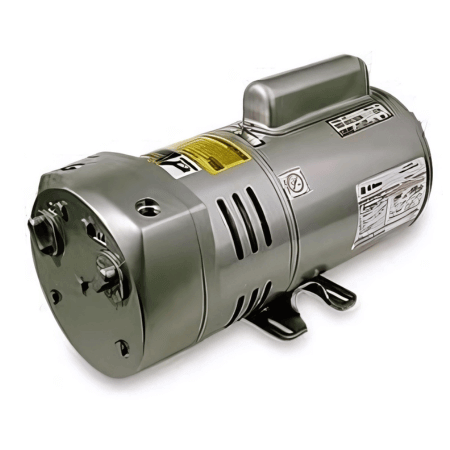
1 HP Gast Rotary Vane Compressor
1 HP Gast Rotary Vane Compressor
ITEM #: RV100
Couldn't load pickup availability
Free Shipping on Orders Over $99
Product Description
1 HP Gast rotary vane compressor for pond aeration is built for pond and lake owners who need dependable, medium-pressure air delivery for diffuser-based circulation and seasonal de-icing setups.
Rotary vane compressors are commonly chosen when you want a strong balance of airflow and steady pressure across typical aeration depths. Compared with many diaphragm-style options, a rotary vane design is often valued for delivering higher air volume—useful when your system supplies multiple diffusers, multiple zones, or an air manifold that must stay consistent as conditions change. The self-adjusting carbon vanes help maintain efficient operation over time and support stable output for day-to-day aeration performance.
Why this compressor fits aeration and de-icing systems
- High airflow potential: Helps push air through tubing runs to your diffuser array to encourage mixing and oxygen transfer.
- Medium-pressure capability: A practical match for many pond and lake layouts where steady pressure supports even distribution.
- Oil-free operation: Keeps routine upkeep straightforward and avoids oil-related concerns around water features.
- Rotary vane consistency: Designed for smooth, continuous air delivery where reliable operation matters.
For best results, pair the compressor with properly sized airline, check valves, and (when running multiple lines) a manifold so airflow can be balanced across outlets. System performance depends on factors like diffuser count, depth, tubing length, and fittings—so planning your layout helps ensure the compressor is matched to real-world air demand.
Choose 1 HP Gast rotary vane compressor for pond aeration when your priority is robust airflow for aeration or de-icing and you want an oil-free compressor style that’s well suited to multi-diffuser installations.
FAQ
Can this support winter de-icing? 1 HP Gast rotary vane compressor for pond aeration is commonly used in systems designed to move warmer water upward to help keep targeted areas more open.
How do I know if it’s the right size? Match air demand (diffusers, depth, line length, and manifold outlets) to compressor capability; your layout ultimately determines required airflow and pressure.
What maintenance is typically involved? Oil-free compressors are generally maintained by keeping intake filtration clean and ensuring airlines and fittings stay unobstructed.